Paper:High-Resolution Image Synthesis with Latent Diffusion
Models
传统的 Diffusion
模型都是在像素空间上运行的,训练和推理速度很慢。同时这样会让模型花费更多精力去优化细节,忽略核心的语义生成。本论文提出了
LDM,是Stable 的奠基之作。
Stable Diffusion 是怎么做的?
首先预训练一个自编码器 ,将图像 映射到低维空间 ,而解码器 将其还原成图像。
然后模型在这个低维空间
进行扩散生成。
另外 Stable Diffusion 还引入了
Cross-Attention,将各种模态(比如文本,草图)经过专用的编码器 转换后,作为 和 ,与潜空间特征 进行交互。
训练函数目标如下:
其实和 DDPM
相比,就是把扩散空间从像素空间改变到了潜空间,而且加了多模态条件控制。
整体架构图如下:
 image.png
为了方便理解,让 Gemini 生成了一段 Pytorch 的伪代码。
1
2
3
4
5
6
7
8
9
10
11
12
13
14
15
16
17
18
19
20
21
22
23
24
25
26
27
28
29
30
31
32
33
34
35
36
37
38
39
40
41
42
43
44
45
46
47
48
49
50
51
52
53
54
55
56
57
58
59
60
61
| import torch
import torch.nn as nn
class LatentDiffusionModel(nn.Module):
def __init__(self):
super().__init__()
self.autoencoder = Autoencoder(KL_or_VQ_reg=True)
self.unet = UNet(in_channels=latent_dim, out_channels=latent_dim)
self.cond_stage_model = TransformerEncoder()
def forward(self, x, y):
"""
x: 输入图像
y: 条件输入 (如 text prompt)
"""
z = self.autoencoder.encode(x)
t = torch.randint(0, T, (z.shape[0],))
noise = torch.randn_like(z)
z_t = self.q_sample(z, t, noise)
context = self.cond_stage_model(y)
predicted_noise = self.unet(z_t, t, context)
loss = F.mse_loss(predicted_noise, noise)
return loss
@torch.no_grad()
def sample(self, y):
z_t = torch.randn((1, latent_dim, h, w))
context = self.cond_stage_model(y)
for t in reversed(range(T)):
z_t = self.denoise_step(z_t, t, context)
return self.autoencoder.decode(z_t)
|
生成效果如何?
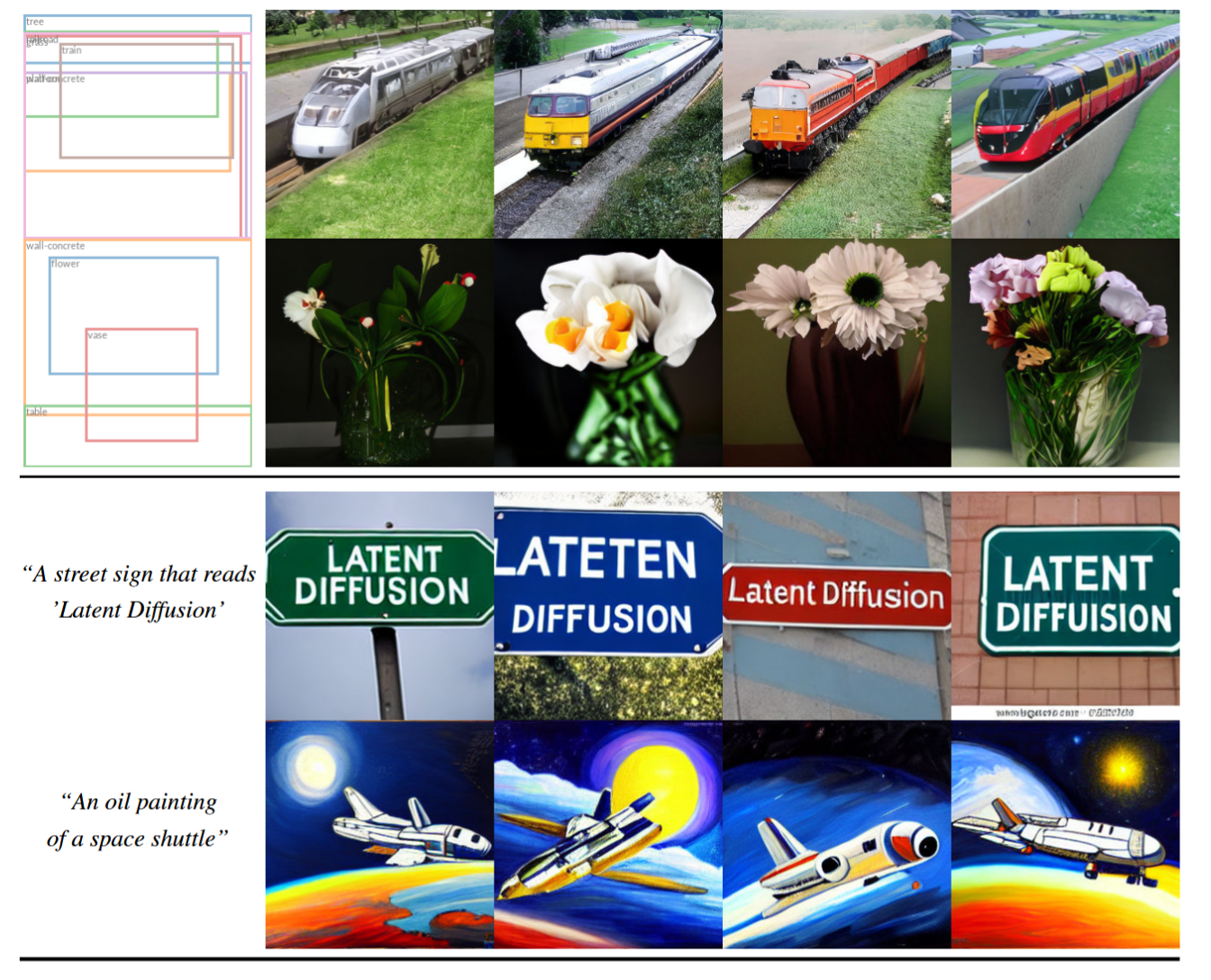 image.png